Mike’s World of fun stuff (pinball, games, electronics, amusement parks, computers, more)
Shapelock is a plastic that is made moldable with only hot water and is perfect for all kinds of do-it-yourself projects.
I finally got my Shapelock plastic molding beads today and decided to try it out. I'm not associated with Shapelock in any way and I (unfortunately
) do not get any payment for this mini-review.
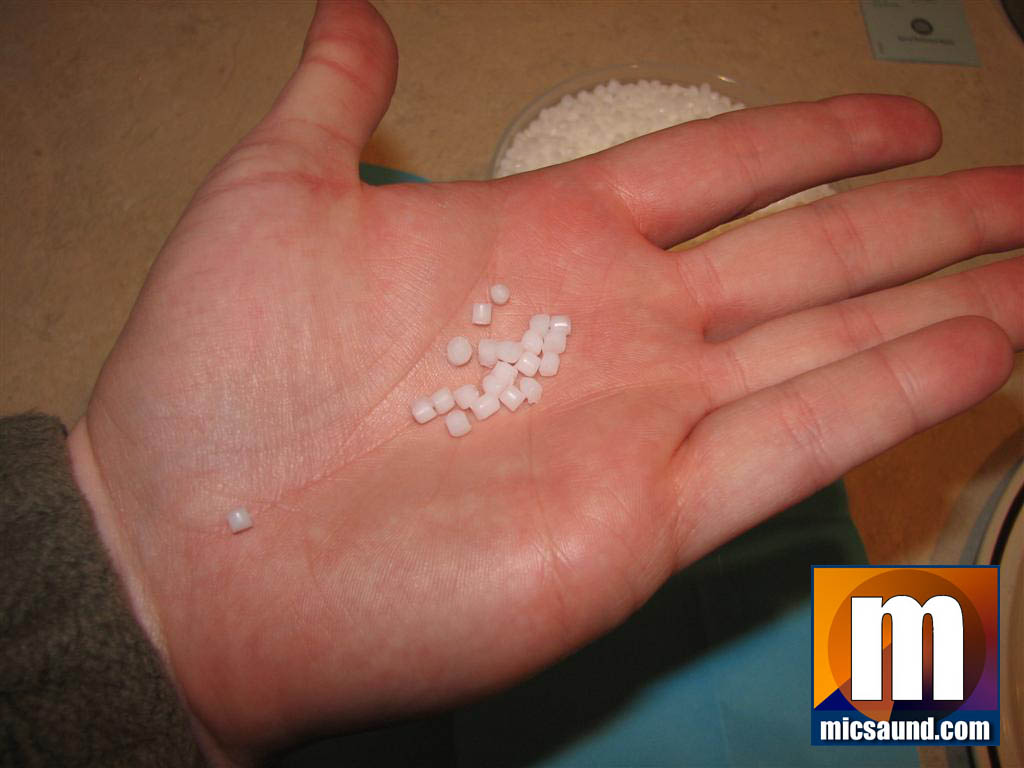
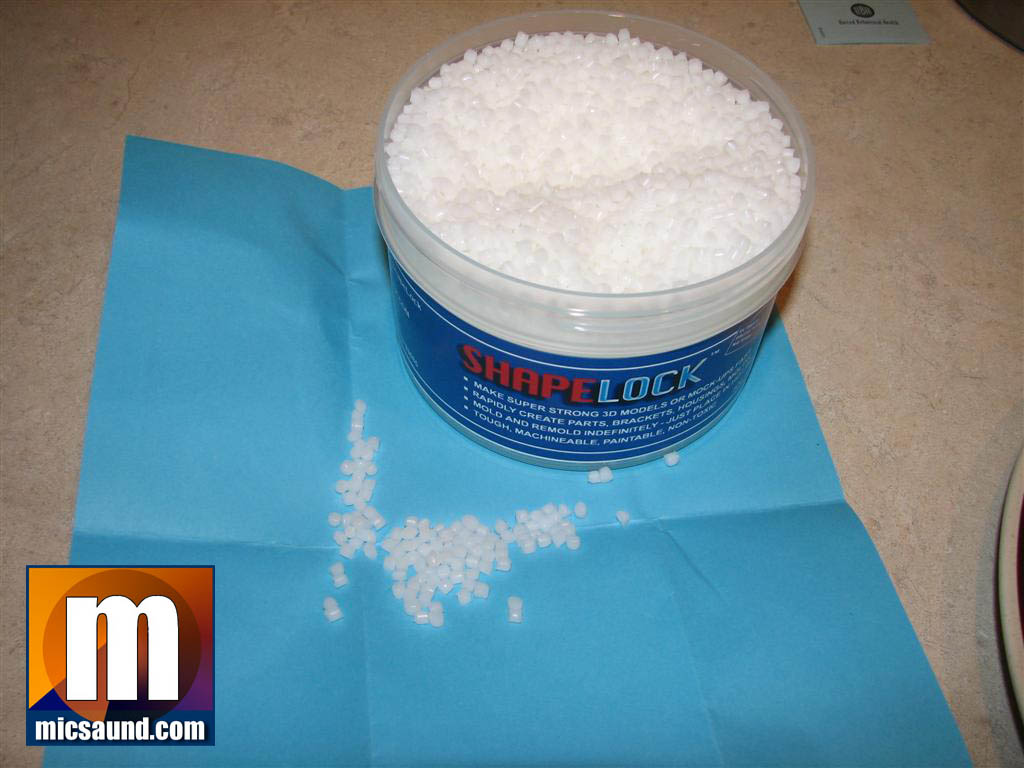
For those who don't know, Shapelock is a polymer (plastic) similar to polypropylene except that it has a very low temperature softening point. The idea is that you heat some water to around 160 degrees F and dump some of the pellets into the water to soften them to a moldable state. After molding, you then allow the plastic to cool and it once again takes-on its hard form. The label likens Shapelock to "modeling clay on steroids" and that's a pretty good analogy.
Chances are that people reading this site have varying interests in such things as pinball machines, electronics goodies, robotics, and other nerdly, gadgety stuff. I doubt that I need to explain why something like Shapelock is useful for such hobbies, but just imagine being able to mold a custom mount for a bank of LEDs or create a new bracket to test the improvement to your pinball machine you've been thinking about. Yeah, that kind of stuff.
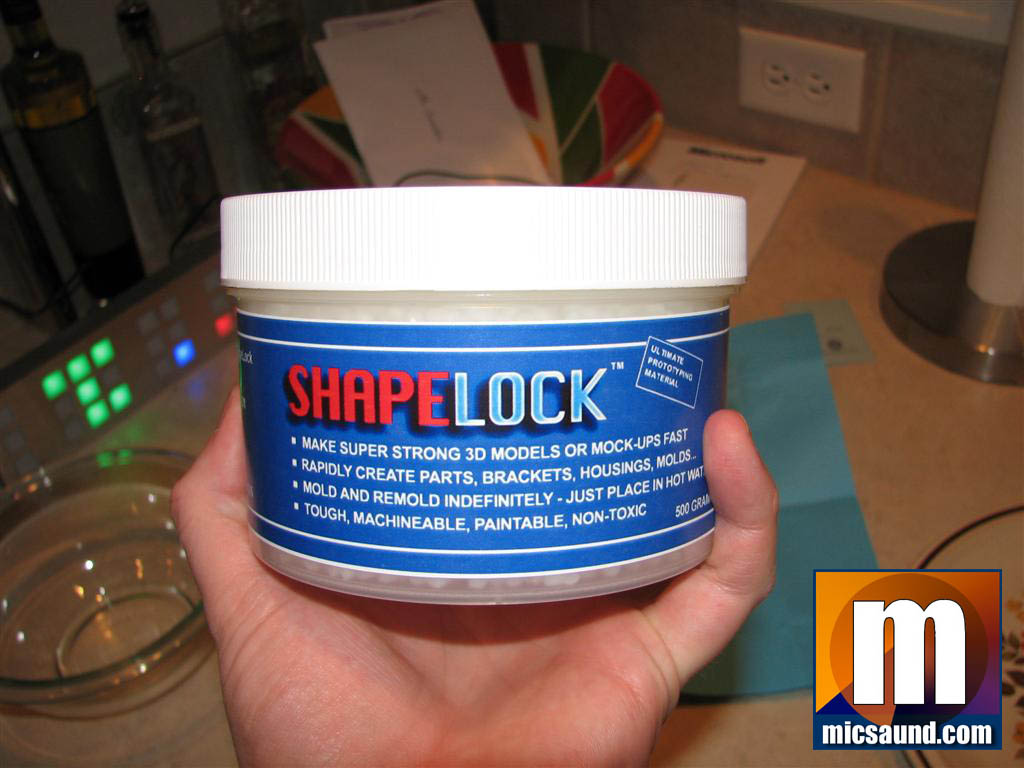
Having a bit of experience with plastics, I knew basically what to expect of Shapelock, so I just ordered the 500 gram container. It was $24.95 plus about $6 for Priority Mail shipping. The also have a "free sample" that you can order and just pay $4.95 for shipping if you're unsure that it'll be useful for your purposes.
Now, onto the test...
Molding
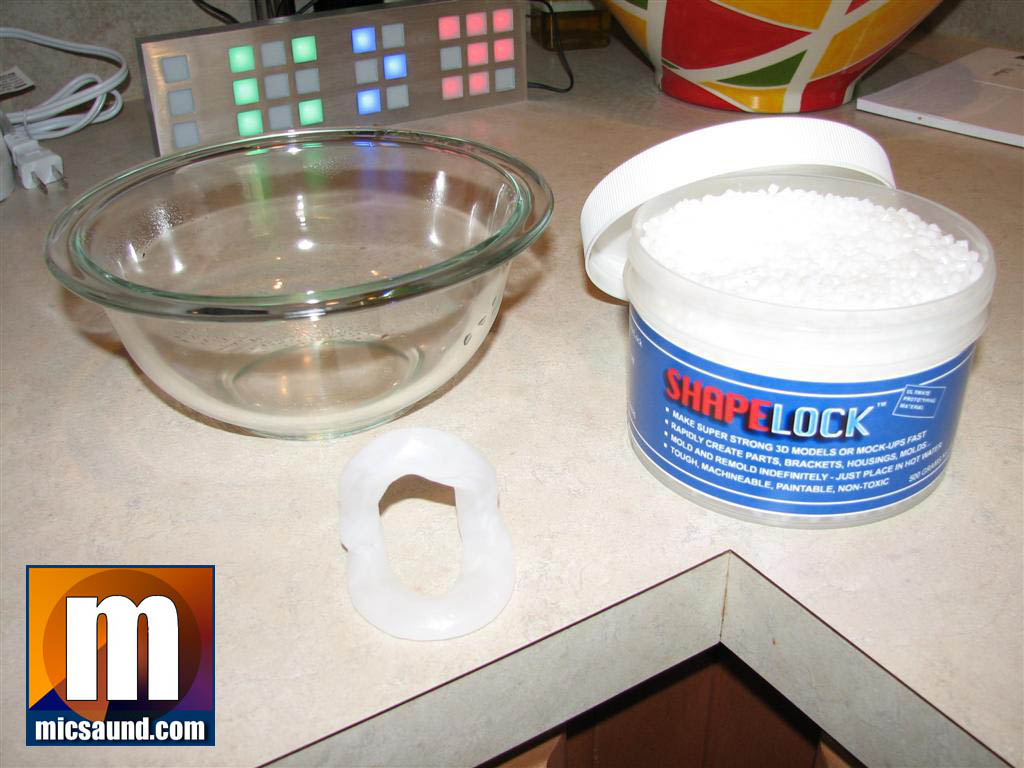
I grabbed a small Pyrex bowl and my trusty Sunbeam Hot Shot Beverage Machine to heat the water (I'm impatient and the Hot Shot takes care of that
)
The Shapelock instructions say not to heat the water to boiling, which the Hot Shot does, but I figured that was more of a safety issue than anything. So, I blasted a coffee mug of water through the Hot Shot and dumped it into the Pyrex bowl, thus promptly cooling the small quantity of water signifiantly right away. Next, I added a few spoonfuls of the Shapelock pellets to the water.
Immediately upon hitting the water, they became slightly sticky and began to clump together. With another minute or two, plus some prodding with a spoon, the pellets were a large, malleable mass in the bottom of the bowl. The individual pellets were still visible, as the plastic does not become totally liquid when heated to these temperatures.
I carefully retrieved the Shapelock blob from the water and drained it over the sink to shed any excess, potentially hot water. The instructions recommend using tongs for this operation, again to prevent anyone from hurting themselves - follow the directions!
With the blob in my hands, I was able to knead the plastic and the individual beads formed into a more uniform modelling clay like texture. The plastic was very easy to stretch, bend, and mold being much the consistency of Play-doh. I rolled it into a long tube with my fingers and joined it into a circle and fiddled with some shapes. I did not find the Shapelock to be gooey or have any problems with it being overly sticky, although it is highly recommended that you not use other plastic implements to work the material as it may stick.
Once I had a suitable shape (suitable for a mini-review), I left it to cool and harden. It took a couple minutes before the plastic was firm and after about 15 minutes, it was pretty cool and hard to the touch. You can accelerate the cooling process with ice water if desired and I'm sure that pieces of Shapelock with more mass will take longer to cool.
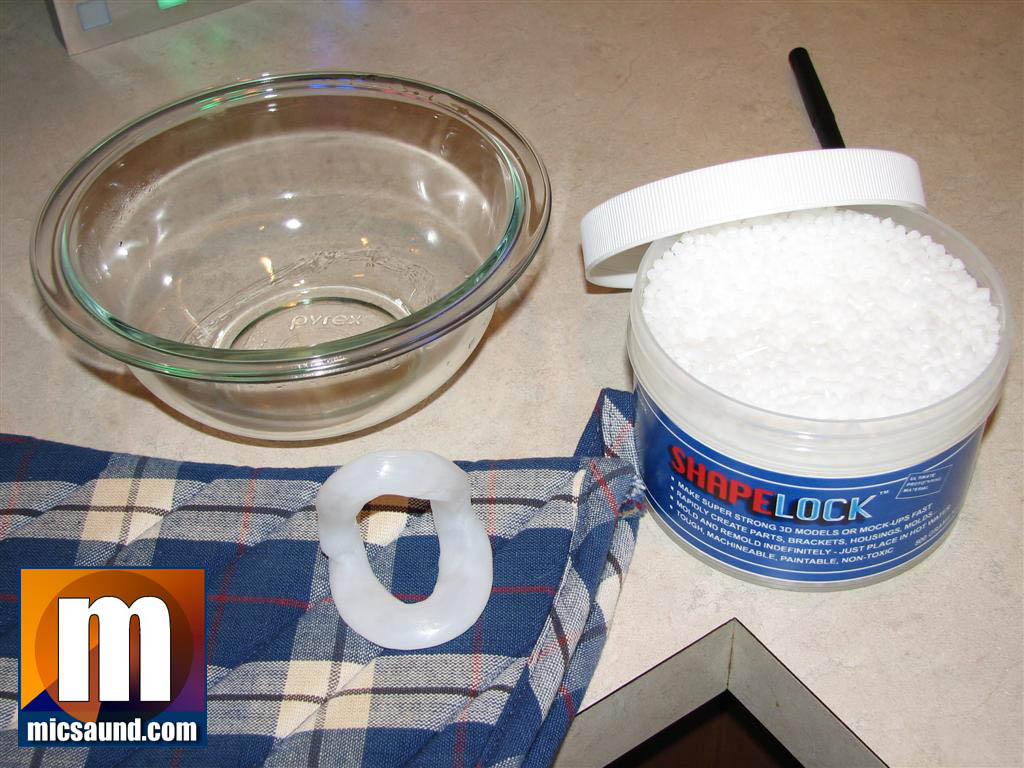
Results:
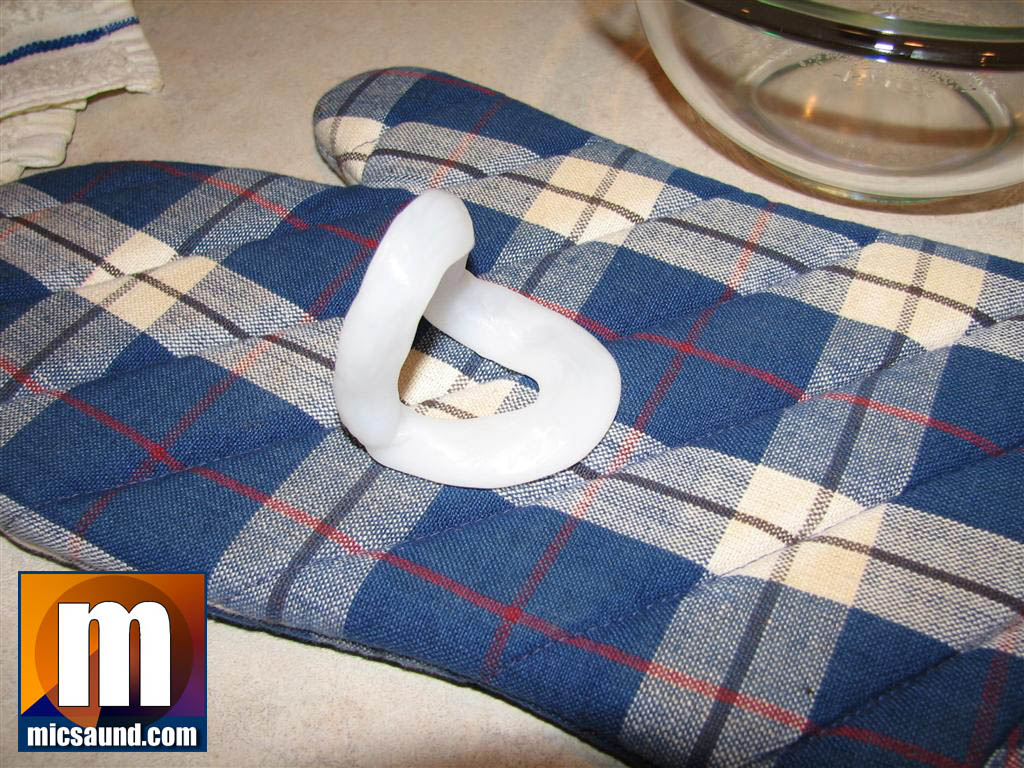
Now, with my folded-ring test object fully cooled, I can say that the Shapelock resin is very strong. As you can see in the photos, I formed a shape that would allow me to attempt to fold the object and it resists quite well. The plastic is hard enough that fingernails won't do major damage although with lots of pressure, will leave a visible indentation/scratch. For anyone who has worked with high-density polypropylene, this will be very familiar. It's fairly slippery, ridgid yet flexible prior to breaking, and a milky white color.
The material can be drilled and machined as long as you watch the temperatures. Anything causing too much heat softens the material and will cause sloppy surfaces or gum-up your cutting device. I drilled several small holes in my test piece and all drilled easily, but the material does not cleanly remove from the hole due to it's slighly rubbery nature. This was not a problem and, for example, a screw could be driven into the holes without any issue, but the hole did not look clean after drilling. Also, without reversing the drill, there was quite a bit of resistance removing the bit, most likely due to the remaining material in the bit flutes. Overall, though, the material is easy to drill.
Conclusion
Overall, I am pleased with this initial experience with the Shapelock. I honestly believe that it will be useful for molding various brackets and gizmos for my pinball machine, slot machine (when I get around to it), radio control airplanes, and many other projects. It is not cheap, but it took a surprisingly little amount to create a blob of useful size. Shapelock is reusable as well, simply requiring a re-heat to soften it and move-on to another project.
However, I cannot recommend this for all projects. Shapelock's strength is the low-temperature melting point. Shapelocks' weakness is the low temperature melting point. In other words, simply due to the nature of the material, it obviously cannot be used for anything that generates much heat, such as making a mount for a high-powered motor which generates heat. However, for room-temperature needs, I doubt that there is anything better for the hobbiest who doesn't want to buy an injection molding machine or pay to have parts machined at the local machine shop.
If this sounds interesting to you, I'd recommend grabbing the free sample or perhaps one of the smaller tubs to try-out. I know that I'll be using it for all kinds of projects and I expect this 500g tub to give me at least 50 more blobs the size of the one you see in the photo (sorry for the imprecise guess) and that's if I don't re-use any of it.
NOTE: It appears that this product is also available under the brand name "Friendly Plastic" so you can keep an eye out for that as well.
Please head-over to the www.PlasticFanatics.com and join the plastics discussion forums to post your questions, ideas, and projects. There is a forum for Shapelock/Friendly Plastic specifically, as well as a forum to post your projects, and several others. I'll select projects from time-to-time and feature them on the top-level page too! The forums are new, so don't be shy and if you have ideas to suggest a better structure or anything, use the Contact link.
Previous post: A peaceful day in Celebration, Florida
Next post: Should people this stupid really be playing poker?
[powered by WordPress.]
34 queries. 0.884 seconds
March 13th, 2006 at 7:54 pm
Cool - digg it!
March 14th, 2006 at 10:04 am
That is a cool looking substance, does it bond to other plastics, or would you have to use screws or glue (would glue cause any sort of melting effect?)
dugg
March 14th, 2006 at 10:17 am
Awesome!
http://www.networking-forum.com
March 14th, 2006 at 10:23 am
Dugg it! =)
March 14th, 2006 at 10:38 am
Now take it to the next level. Go investigate Kydex, another thermoplastic. Takes more heat and it’s more of a “cut out flat pieces at normal temp and then heat and bend” sort of thing, great for odd-shaped brackets. It can also be molded around things, like cellphones, knives, guns…go google “kydex holster”.
It’s not as moldable as the stuff above but it’s much tougher. Thicknesses of .125″ or more can be used to custom-mold sports armor, knee/elbow pads and the like.
March 14th, 2006 at 3:01 pm
That’s pretty neat! Any possibility to make this plastic pernament (without it melting again in heat?)
March 14th, 2006 at 4:45 pm
Did you try “freezing” your ring before drilling? Just pop it in the fridge or deep freeze for a while. It shouldn’t get too brittle. (If it does, you can re-mold it.)
March 14th, 2006 at 5:48 pm
When pulling the drill out of a hole, i recommend still pulling the trigger while pulling. it will leave a clean hole.
March 14th, 2006 at 6:02 pm
Thanks for the tips! I was still running the drill while pulling it back out, but it was slowly turning due to the small piece I was trying to drill. I think that freezing the piece might help also if a clean-looking hole is needed. The leftover material in my test case was easily removed with a knife, so no matter how you do it, it works great.
AFAIK, there is no way to permanently make the plastic “non meltable”, Luke. This is a thermoplastic and you’d need some kind of chemical reaction (like epoxy) to make a non-thermo-sensitive type object.
Also, sorry to all of the Diggers and other visitors who found the site offline this morning. The sudden rush of traffic from the front-page appearance on digg caused my hosting company to think I was getting a DDOS attack and they disabled my account. I guess if they would have looked at the referrer, they could see it’s all coming from one site (digg) but oh well. Thanks for sticking with me and making this my first real Digg
Mike
March 14th, 2006 at 6:15 pm
[...] Link (via Digg) [...]
March 14th, 2006 at 7:01 pm
That is funny
The firestorm of traffic from being ‘dugg’ appeared to be a DOS attack
That is just too funny ;D
March 14th, 2006 at 8:35 pm
Yeah its cool, I saw it on Make Magazines podcast, but i have yet to see any one do any thing cool or useful with it, so far its all talk.
March 14th, 2006 at 9:50 pm
I think it’s probably one of those things that lives a secret life in projects. Nobody probably thinks to take a pic of a lowly home-made bracket or other things it’s used for. My guess at least…
March 15th, 2006 at 12:58 am
Great
March 15th, 2006 at 6:26 am
Once you have made a shape, could you then spray or paint it with some sort of flastic/glue to make it more permanant, so that even if it does melt a bit, the outside layer will hold it together?
March 15th, 2006 at 6:36 am
I wonder if you could mix in other materials before you mold it into shape to give it more strength or flexibility or electrical conductivity or whatever….
Sounds like something fun to check out. Thanks!
March 15th, 2006 at 8:03 am
[...] There is a really good review at micsaund.com that you should check out because this guy has actually played with the stuff. [...]
March 15th, 2006 at 10:53 am
To prevent sticking during drilling, consider submerging the part in cool water. The tip of the drill bit will be submerged, but that shouldn’t hurt anything. The water can absorb LOTS of heat before it reaches the softening point of the plastic.
Also consider drilling with a slightly smaller drill then, after cooling, following with the proper-sized drill. The less material removed, the less heat will be generated.
March 16th, 2006 at 3:12 pm
[...] Shapelock Plastic Molding - Platic you can mold yourself. [...]
March 22nd, 2006 at 9:56 am
Plastic you can mold in your home for DIY projects…
Mike writes - “For those who don’t know, Shapelock is a polymer (plastic) similar to polypropylene except that it has a very low temperature softening point. The idea is that you heat some water to around 160 degrees F……
March 22nd, 2006 at 11:27 am
I think I just found an alternative to the $300 my dentist wants to custom-mold me a thinner mouthguard than can be found in sporting goods stores! The sample pack looks perfect for this!
March 22nd, 2006 at 11:53 am
Thanks for posting this review. It looks like it will be perfect for my next project. I have an old Sunto watch that I have little use for, and was planning to mod it to affix it to the inner pocket of some of my jackets (I’ll post a more thorough description of the process on my site in the next couple of days), and this looks like it would make the perfect substance to work with.
March 22nd, 2006 at 12:13 pm
Anyone know if this could be used as a mold for resin? Or would the resin stick to much?
March 22nd, 2006 at 6:22 pm
@Tony: I’m not sure what kind of resin you’re wondering about (acrylic, polyester, epoxy, etc.) and that would make a potentially huge difference.
If I assume that you’re trying to cast something using acrylic or polyester, I’d say that the Shapelock would work just fine. As with most molds, you’d probably want to use some release agent (silicone spray for example) but I don’t see why you could not use the Shapelock to form a pourable resin.
There is, however, one caveat. Many 2-part resins generate heat. Some generate quite a bit of heat. That could be bad considering the low softening point of the Shapelock.
Mike
March 22nd, 2006 at 6:29 pm
From the Make blog posting, here are some comments that might be useful. I’m not sure if other blog’s comments should auto-appear here or not (this is my first blog) so please let me know if they should
—
Posted by: Giusp on March 22, 2006 at 02:56 PM
I got some of this stuff last week and have been playing with it a lot, here are some things I’ve found out recently…
* With a pasta roller, you know, those silver machines you see at home goods stores, you can make nice even sheets for making good looking constructions. Making little planks also gives you ’stock’ that heats up very quickly.
* Fusion brand rustoleum plastic spray paint sticks to it very nicely, so it can be painted, if you should need to.
* It has been advertised to be able to be machined, but since it behaves like nylon or delrin, that’s not really true. It didn’t like it when I tried. I haven’t tried drilling or tapping it yet (hmmm, that sounds not quite right)
* With a hot putty knife you can connect new hot pieces to previously cooled constructions. I keep the putty knife in the same hot water pot where I’m heating the stuff. This gives you something to fish it out with.
* It’s available in colors under the name ‘friendly plastic’
* It’s very cool stuff with a ton of uses. After you play with it for a while you start to see all kinds of things it could help with.
—
March 22nd, 2006 at 7:41 pm
Thanks for your review!
March 23rd, 2006 at 10:50 am
Where can I get this stuff?
March 23rd, 2006 at 8:29 pm
Micro-Mark sells a two part RTV Silicone putty for mold making. They also sell liquid RTV Silicone and casting resins, mold release spray, etc.. I’m wondering if any of the major plastic suppliers have a similar polypropylene- I’m a cheapskate. How is it with hand filing?
March 24th, 2006 at 6:55 pm
For my fellow cheapskates - I know you are out there - I will share my ghetto-fabulous method for molding scavenged plastic. ABS plastic dissolves in acetone! Get a good thick piece (television/CRT housing, motorcycle fairing, etc.), and make a pile of shavings by repeatedly drilling holes in it. When you get a good amount, dump them into a small disposable container with a bit of acetone. Stir until gooey. Remove the blob and mold. It will take at least 24 hours to fully cure, so be patient. Also, air bubbles inevitably get into the mix, making this recycled ABS weaker than original. But it won’t melt at 160 degrees, either.
This stuff gets really sticky when molding! It is manageable though, if you keep your fingertips wet with acetone.
This method can be used to repair cracks in a motorcycle fairing!
March 25th, 2006 at 1:13 pm
It looks like Shapelock and other similar low-temp hobbiest plastics might be a polymer called polycaprolactone.
Here is a bit of info to get started with if you’re interested.
April 6th, 2006 at 12:38 pm
I used this material many years ago. It has its good points. I have developed a nifty shape changeable material available in sheet form that can do amazing things in addition to forming shapes. All you need is 105 degrees to soften enabling you to change a shape to what you desire.
http://www.bendableplastic.com
June 9th, 2006 at 2:51 am
[...] Here is a review of a REALLY cool sounding plastic you can soak in hot water to soften and make all kinds of parts for case-mods, toys, and all of your other projects. Never again do you have to wish for custom designed plastic part!read more | digg story [...]
July 22nd, 2006 at 12:03 am
hi looks great, could you tell me how transparent this product is.
July 23rd, 2006 at 4:44 pm
Hi Andrew,
It’s not very transparent at all. If you stretch it thin enough, you might say it has a small amount of translucency, but it’s certainly nothing that you’ll be shining light through or using to build clear windows for models or anything like that.
The color of the pellets and the ring I made in the photos shows the final, hardened color.
Mike
August 21st, 2006 at 5:12 pm
hello everyone i have a question for whoever might know the answer. well i’ve been trying to find a way to mold my own car body parts such as my own custom designed body kit for my chevy s10 1996 and to be able to create my own design the way i want it to be would be really cool so im asking is it possible to use the shapelock pellets to design lets say a front air damn or side skirts? if someone could please reply that would be great my e-mail is arty2007@hotmail.com thanks again
August 21st, 2006 at 5:26 pm
Hi Arty,
While I it would technically be possible to use Shapelock to mold a car part, you must consider the temperatures involved. As you can see from the review, it’s a low-temp plastic so that means that it could soften just from sitting in the hot sun over black asphalt, for example. It might not blob and goob, but it could get soft enough to deform when you start driving due to air pressure.
The more common method of making custom car body panels is with fiberglass. This is a well-known process and that’s why any whale-tails, spoilers, air dams, ground effect kits, etc. that you buy will likely be fiberglass. It’s easy to work with once you know what you’re doing and have experimented a bit and it’s fairly cheap. I’m sure that some time on Google or the public library will yield tons of info on laying (forming) fiberglass.
Mike
August 25th, 2006 at 7:12 am
[...] Here is a review of a REALLY cool sounding plastic you can soak in hot water to soften and make all kinds of parts for case-mods, toys, and all of your other projects. Never again do you have to wish for custom designed plastic part!read more | digg story [...]
September 13th, 2006 at 8:15 pm
hey, were can i get some
December 17th, 2006 at 12:33 pm
Thanks for sharing this product. I have not come across this before and though I can’t at the moment think of what I would do with it, I believe there will be a future DIY project where I could put this to use. Definately eaiser and safer than using a hot plate type product.
February 2nd, 2007 at 8:45 pm
hi there, could a collapsible tubing be made from that?
February 2nd, 2007 at 8:50 pm
Hi Brian,
The plastic is quite rigid and hard when it is cool, so I don’t think that you could make a collapsible tubing from it, if I’m envisioning a similar item as you’re thinking.
February 18th, 2007 at 4:14 pm
Would this be suitable for making molds for casting plaster or conrete? That is, to create a mold by shaping the product over an object, then removing this and (when cool and set) pouring in plaster or concrete?
If so, what release agents would you recommend?
March 9th, 2007 at 9:42 am
Where could I find something like this that would dry and harden as a clear plastic?
March 25th, 2007 at 12:58 pm
I just sent for the free sample, to be used for fitting Fangs for a costume party later this year. For people who don’t like or trust the stuff that comes with the kits available from some sources, this is an excellent product and safe as well.
March 25th, 2007 at 8:22 pm
Great idea Tony. I’d imagine that this kind of home-moldable plastic has all sorts of uses in theatre/costume makeup. Thanks for the comment!
Mike
March 26th, 2007 at 10:13 am
micsaud, I beleive it’s the same stuff used by the company Dental Distortions. Other companies use some kind of powder-liquid mix. But I think the hydroplastic stuff is better since it’s remoldable.
June 30th, 2007 at 5:15 am
Whoa! I’m probably the last to find out about this! This is really cool though! I have to try it out myself! Thanks for sharing the info
June 30th, 2007 at 8:39 am
Jennifer: Yep, it’s really neat stuff! Thanks for the comment. You might also be interested in checking-out a new site about using plastics like Friendly Plastic and Shaplock for hobbyists. It’s still very new, but more content is coming and you’re welcome to get onto the forums and start discussions, ask questions, or post about your projects!
Mike
August 29th, 2007 at 2:14 am
Thank you for the article! I was searching for a polymer that can be used for making waste mold and that are reusable. Your article really helps! sadly I cant get it in my country.
August 29th, 2007 at 9:48 am
Edsa: Thanks for the comment! Your site has some pretty cool sculptures - the “testing” winged woman is really cool.
September 3rd, 2007 at 8:22 am
[...] temperatures to a Play-Doh consistency. This is PERFECT for our intentions. There’s a tutorial here on how to use Shapelock. Now I haven’t tried this yet but my idea is to print out the [...]
November 22nd, 2007 at 10:38 am
[...] Plastic You Can Mold In Your Home [...]
December 22nd, 2007 at 11:12 pm
[...] named Keith. He had googled his way to a short post on my site Jaymis.com looking for a source of Friendly Plastic/Shapelock/Polymorph in Australia. After a couple of emails back and forth I figured out that he’s Keith from [...]
January 3rd, 2008 at 4:54 pm
[...] this stuff to make brackets and such. I guess you could use it as plastic to fill a mold, maybe? Plastic you can mold in your home for DIY projects « micsaund.com __________________ X7, polished internals, New Designz F6 Tornado, JCS Red Hot Power Tube, [...]
April 1st, 2008 at 7:44 am
awesome!
I was looking up moldable plastics to make a marvin costume (from hitchhiker’s guide to the galaxy)
just wondering if this stuff would be suitable, and how much would I need?
And also what do you suggest for molds for such a project?
It’d be great if you could e-mail me at icebox138@hotmail.com
thanks!
April 29th, 2008 at 5:19 am
Why not just go to a plastic injection molding company and they will make it for you?
August 25th, 2008 at 6:36 pm
[...] read more | digg story [...]